
Arizona Auto Glass Insurance Guide
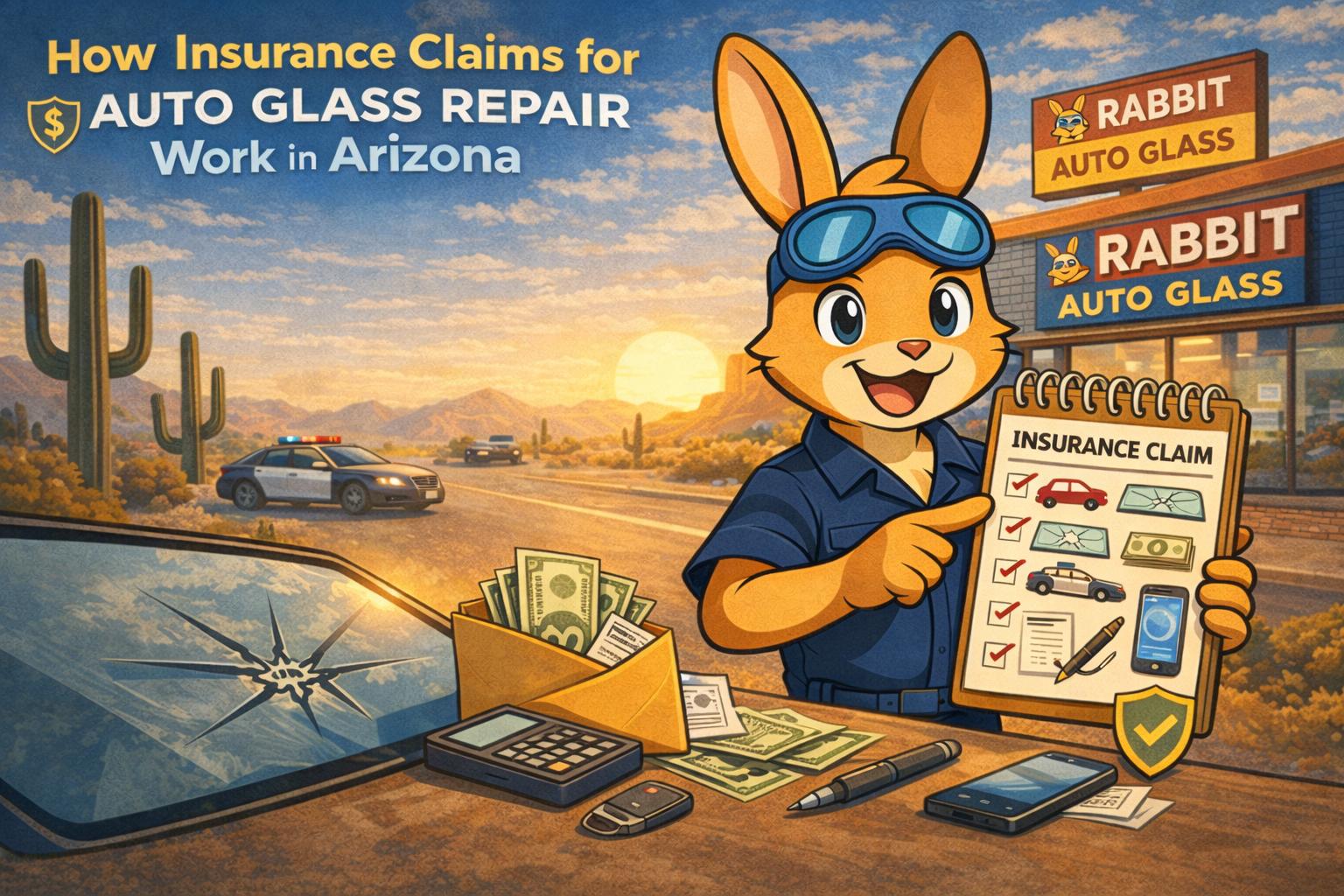
How Insurance Claims for Auto Glass Repair Work in Arizona
At Rabbit Auto Glass of Phoenix, we help drivers understand how insurance claims for auto glass repair typically work in Arizona. We are an auto glass company, not an insurance provider, but we work with insurance carriers every day to help customers move from damage to safe repair or replacement. In Arizona, most glass claims cover necessary labor, parts, and required calibration, while upgrades and non essential services are usually excluded. Below, we explain what is commonly covered, how timing and deductibles affect cost, and how we help keep the process clear and efficient.
What an Arizona Auto Glass Claim Covers and Why It Matters
From our experience as an Arizona auto glass shop, insurance claims typically cover the work required to restore safety and visibility. This often includes glass parts, professional installation, adhesives, moldings when required, and ADAS calibration when the vehicle requires it.
Claims usually do not cover cosmetic upgrades, specialty tint, or aftermarket add ons that are not required to restore the vehicle to safe operating condition. Coverage also depends on policy terms, deductible selection, and whether the damage qualifies for repair or requires replacement.
Understanding what is included helps prevent surprises and allows us to confirm expectations before scheduling service.
When to File: Timelines, Policy Types, and Weather Related Factors in Arizona
Most insurance policies require prompt reporting of glass damage. In practice, this means contacting your insurer soon after the damage occurs and documenting the condition before it spreads.
Comprehensive coverage commonly applies to non collision glass damage such as rocks, debris, hail, or storm related impacts. Collision coverage usually applies when glass damage occurs during an accident.
Severe weather events can change how insurers process claims, so documenting the date, location, and conditions is important. We recommend taking photos early and confirming timelines directly with your insurer.
Step by Step Filing Process and What We Support
Filing a glass claim usually starts with basic documentation. Insurers may request photos of the damage, vehicle information, policy details, and a brief description of how the damage occurred.
Once the claim is opened, an adjuster or glass network may review the information and request additional documentation. Approval typically authorizes repair or replacement, not optional services.
At Rabbit Auto Glass of Phoenix, we help by providing accurate assessments, estimates, and supporting photos when requested. Our goal is to reduce delays and keep the process moving smoothly.
How Deductibles and Coverage Limits Shape Your Final Cost
Deductibles are determined by your insurance policy, not by the repair shop. If your deductible exceeds the cost of the repair or replacement, you may pay out of pocket.
Many Arizona drivers carry an optional full glass or safety equipment endorsement. When this option is active, insurers often waive the deductible for windshield repair or replacement.
Coverage limits, approved labor rates, and parts eligibility all affect the final bill. We review these details before work begins so you know what to expect.
Tips We Share to Speed Approval and Avoid Cost Surprises
Clear documentation is the fastest way to avoid delays. Take photos early, keep claim numbers handy, and respond promptly to insurer requests.
Confirm deductible amounts and coverage type before authorizing work. Ask whether calibration is required and whether it is approved as part of the claim.
As your glass provider, we focus on transparency, accurate estimates, and clear communication so there are no surprises at pickup or completion.
Frequently Asked Questions
From what we see, glass only claims are often treated differently than at fault accident claims. Premium impact depends on the insurer and claim history, so we recommend confirming directly with your carrier.
In most cases, yes. Insurance may suggest a preferred shop, but you generally have the right to choose your glass provider.
Comprehensive coverage applies to non collision damage. Full glass coverage is an optional endorsement that often removes the deductible for glass only claims.
Approval depends on policy terms. Some insurers approve aftermarket glass by default, while others allow OEM under certain conditions. We review options with you before installation.