
Arizona Auto Glass Safety
What Happens During a Professional Auto Glass Inspection
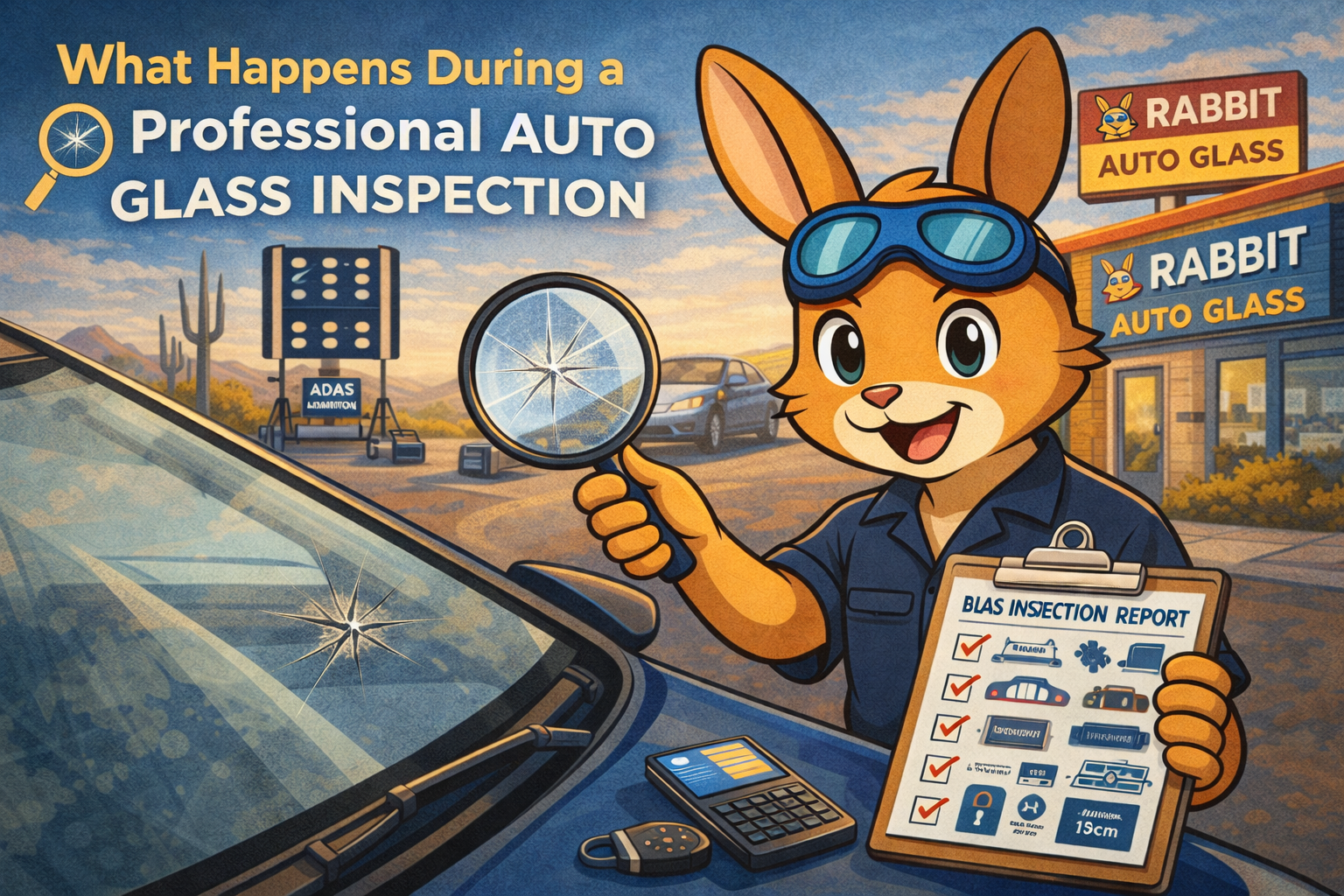
Professional Auto Glass Inspection includes inspecting condition, installation quality, and safety related performance. The process includes exterior and interior assessments, seal and mounting checks, and visibility verification. At Rabbit Auto Glass of Phoenix and Tucson, a professional auto glass inspection is a structured safety evaluation, not a quick glance. Findings are documented with measurements and clear recommendations so you understand what is urgent, what is minor, and what steps protect your vehicle and occupants.
What a Professional Auto Glass Inspection Covers
A professional auto glass inspection evaluates the entire glazing system for safety and compliance. We begin with an exterior review of the windshield, side glass, and rear glass, noting chips, cracks, edge damage, and distortion that may impair visibility or structural performance.
Interior checks follow, focusing on clarity through the glass, glare, reflections, and any obstruction in the driver’s primary viewing area. We verify glass type and proper mounting to ensure it meets vehicle design and safety requirements.
This inspection approach aligns with guidance from the National Highway Traffic Safety Administration, which recognizes windshields as structural safety components that support roof strength and airbag deployment. National Highway Traffic Safety Administration vehicle glass guidance
How Technicians Evaluate Glass Integrity and Safety
Glass integrity is evaluated using objective and repeatable checks. We visually document cracks, chips, and laminate irregularities, recording size, location, and proximity to edges where stress concentration is highest.
Laminated windshields are examined for internal film separation, clouding, or moisture intrusion, which can indicate early delamination. These conditions may not be obvious to drivers but can weaken long term performance.
Our findings are compared against manufacturer guidance and accepted safety standards to determine whether repair is appropriate or replacement is the safer option.
Inspecting Installation Quality, Seals, and Wiper Systems
Installation inspection focuses on how the glass interfaces with the vehicle body. We check alignment, edge contact, and seal continuity to confirm proper seating and weather protection.
Weatherstrips and bonding areas are examined for gaps, compression loss, or contamination that could allow wind noise or water intrusion. These issues are more likely to appear in Arizona due to heat driven expansion.
Wiper systems are also evaluated. We test blade contact, sweep pattern, and parking position to confirm clear visibility at normal driving speeds.
The Arizona Department of Transportation emphasizes clear driver visibility as a core road safety requirement. Arizona Department of Transportation motor vehicle safety resources
Hidden Issues Worth Catching Early
Some of the most serious auto glass issues are not immediately visible. Delamination, adhesive separation, and internal haze can develop gradually and worsen with heat exposure.
We inspect edges and laminate layers closely, looking for lifting, discoloration, or trapped moisture. These findings are documented and explained so you understand potential progression and safety impact.
Early identification reduces the risk of sudden failure and helps preserve the integrity of the vehicle structure.
After the Inspection, Understanding Results and Next Steps
After completing the inspection, we provide a clear summary of findings. Issues are categorized by urgency, with safety critical concerns addressed first.
When repair is viable, we explain scope, limitations, and expected performance. When replacement is recommended, we outline why repair would not meet safety or durability standards.
Our goal is informed decision making, not pressure. You receive transparent guidance based on documented conditions.
Frequently Asked Questions
Most inspections take twenty to forty minutes depending on vehicle design and access. The goal is accuracy, not speed.
Yes. We evaluate window movement, track alignment, and regulator operation to identify binding or abnormal wear.
Yes. We offer mobile inspections at homes, workplaces, and fleet locations across Phoenix and Tucson.
Cosmetic scratches are documented and evaluated for visibility impact, even if they are not structural issues.
If a chip is repaired during inspection, the repair is documented and the glass is re evaluated to confirm safety and clarity.