
Phoenix Auto Glass Guide
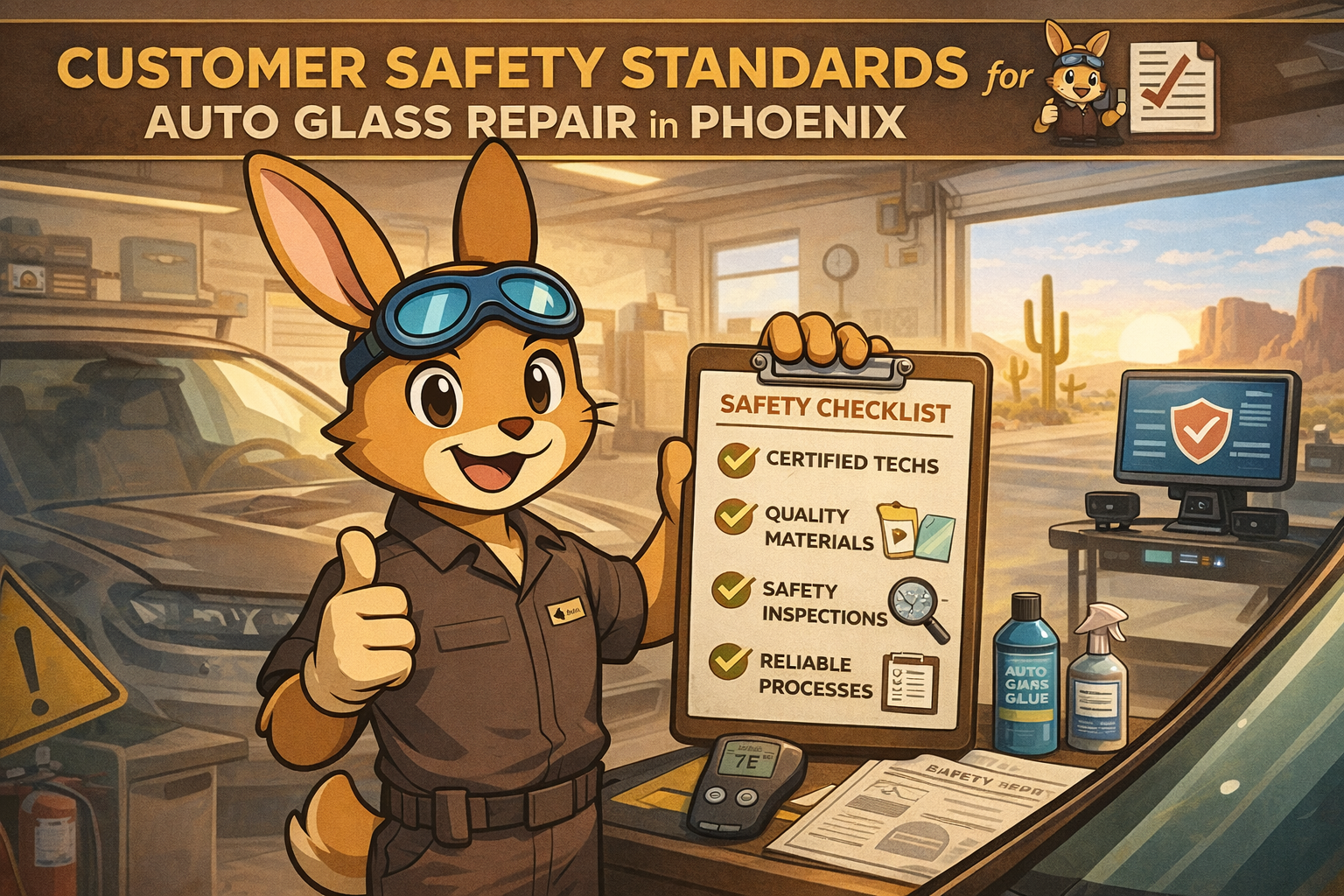
Customer Safety Standards for Auto Glass Repair in Phoenix
We set strict, documented safety standards for auto glass repair in Phoenix, so every windshield repair or replacement follows proven procedures from material selection through bonded performance. We verify glass specifications, adhesives, primers, and surface prep; we document lot numbers, cure conditions, and safe drive away guidance. We account for Phoenix heat and UV exposure in every step and quality check. Below, we explain the standards that matter, how trained technicians apply them, and what a safe, compliant service visit should look like.
What Safety Standards Govern Auto Glass Repair in Phoenix
In Phoenix, auto glass repair and replacement are guided by a combination of federal vehicle safety requirements, vehicle manufacturer procedures, and widely used industry standards for installation quality. For replacement work, shops commonly align to Federal Motor Vehicle Safety Standards for glazing materials and windshield retention performance, and then follow vehicle specific installation procedures to maintain occupant protection features like airbags and advanced driver assistance cameras.
For repair work, the focus is on visibility and structural risk control; the repair must not create unsafe distortion, and the damage must fall within repairable limits based on size, location, and crack behavior. A safe process includes controlled cleaning, proper resin selection, stable temperature handling, and final inspection for clarity and completeness.
Quality programs like AGRSS are often used as a practical benchmark for process control, technician training, and documentation. A shop that can explain what standards it follows, how it verifies each step, and what it documents is usually operating with stronger safety discipline.
How Certified Technicians Ensure Proper Materials and Bonding
Trained technicians verify each material and bonding step against the vehicle requirements and the adhesive manufacturer instructions, because compatibility and process control matter more than brand names. Before any work begins, they confirm glass type, bracket and sensor compatibility, and the correct adhesive, primer, and activator system for the vehicle and conditions.
During installation, they control surface preparation, pinchweld condition, corrosion handling, and adhesive bead shape so the bond line supports proper retention. They also track key variables; adhesive lot numbers, primer lot numbers, ambient and surface temperature, and cure conditions that influence safe drive away time.
After installation, a safe workflow includes inspection for full contact, proper trim fit, water leak checks when applicable, and camera or sensor calibration verification when the vehicle requires it. The goal is consistent, repeatable bonding performance, not a quick cosmetic finish.
Why Phoenix Climate Matters; Material Choices and Installation Nuances
Phoenix heat and sun exposure can shorten working time and change how adhesives and resins behave, so climate control and process discipline matter. High surface temperatures can cause adhesives to skin over too fast, reduce wet out, or shift cure behavior, especially if glass and vehicle surfaces are not conditioned before application.
UV exposure and long term heat cycling can stress materials over time, which is why it is important to use automotive grade glass and adhesive systems with appropriate environmental resistance. Shops that manage heat risk typically use shaded work areas, controlled staging of materials, and temperature checks to keep the process within the adhesive manufacturer requirements.
For repairs, the same climate factors apply; resin viscosity and curing control must be managed to reduce haze, trapped air, and incomplete fill. The best results come from stable prep, controlled application timing, and final inspection under both shade and direct light conditions.
How to Evaluate a Shop’s Safety Practices and Certifications
To evaluate a shop’s safety practices, look for objective proof of process control, not marketing language. Ask what standards they follow, whether they train technicians continuously, and whether they document adhesive systems, lot numbers, and safe drive away guidance.
Look for evidence of calibration capability or referral flow for vehicles that require camera and sensor calibration after glass replacement. Ask how they handle corrosion on the bonding surface, how they confirm correct glass and bracket fit, and what they do when the vehicle requires specific procedures.
Strong shops can show written warranty terms, explain limitations clearly, and describe their internal quality checks. If answers are vague, or if the shop avoids discussing safe drive away time and calibration requirements, treat that as a safety red flag.
What to Expect During a Safe, Compliant Windshield Repair or Replacement
A safe service visit should start with a clear damage and vehicle assessment; repairability, sensor presence, and any safety critical constraints should be explained before work begins. For replacement, you should hear which adhesive system will be used, how surfaces will be prepared, and what safe drive away guidance applies for your vehicle and conditions.
During the work, technicians should protect the interior, manage glass handling safely, and follow a controlled prep and bonding routine. If the vehicle requires camera or sensor calibration, you should be told what will be calibrated and how the shop verifies completion.
At the end, you should receive aftercare instructions and realistic expectations; curing guidance, when car washes are safe, what to do if you notice leaks or wind noise, and how warranty terms apply. The result should restore visibility, structural support, and system functionality, with documentation that supports accountability.
Frequently Asked Questions
Yes. Even small chips should be assessed for visibility impact and crack risk. A safe decision looks at chip size, location, depth, and any crack legs; if the damage is in the driver view area, near an edge, or spreading, replacement may be safer than repair.
Warranty terms vary by shop and by vehicle. Many shops offer limited warranties for workmanship issues like leaks or wind noise, and some offer longer coverage; always ask for the warranty in writing and confirm what is included and excluded.
Most safety requirements you will hear about come from federal vehicle safety rules, Arizona laws, and manufacturer procedures, not from Phoenix city specific standards. The practical differences usually come from shop quality programs, insurer processes, and how well the shop follows vehicle specific instructions.
It depends on what was done. Chip repairs are often drive ready shortly after curing, while replacements require a safe drive away time based on the adhesive system, temperature, and vehicle design; the shop should give you a specific timeline and aftercare steps for your conditions.
They can, if the technician controls the environment and follows the same procedures and documentation. The key is temperature management, cleanliness, correct materials, and verification steps; ask how the team controls heat, wind, and dust, and how they confirm safe drive away guidance and calibration needs.