
Phoenix Auto Glass Safety Guide
The True Cost of Ignoring a Cracked Windshield in Phoenix
In Arizona heat, cracks spread faster, safety systems rely on the windshield for support, and small delays often turn repairs into full replacements. At Rabbit Auto Glass of Phoenix and Tucson, we see every day that ignoring a cracked windshield is not a cosmetic decision. The real cost shows up in safety risk, higher repair expense, and insurance complications. Below, we explain why cracks worsen so quickly in Phoenix, what the risks really are, and when to act.
Why Windshields Crack Faster in Phoenix
Phoenix windshields experience extreme thermal stress. Daytime heat followed by cooler nights causes glass to expand and contract repeatedly. According to the Arizona Department of Transportation, roadway vibration, debris, and temperature swings are common contributors to windshield damage across the state.
Once a crack forms, these conditions accelerate growth. Heat increases internal stress at the edges of a crack, while potholes, braking, and highway vibration push that stress further. This is why damage that looks stable one week can spread suddenly the next.
Source, Arizona Department of Transportation roadway safety resources
The Hidden Costs of Waiting Too Long
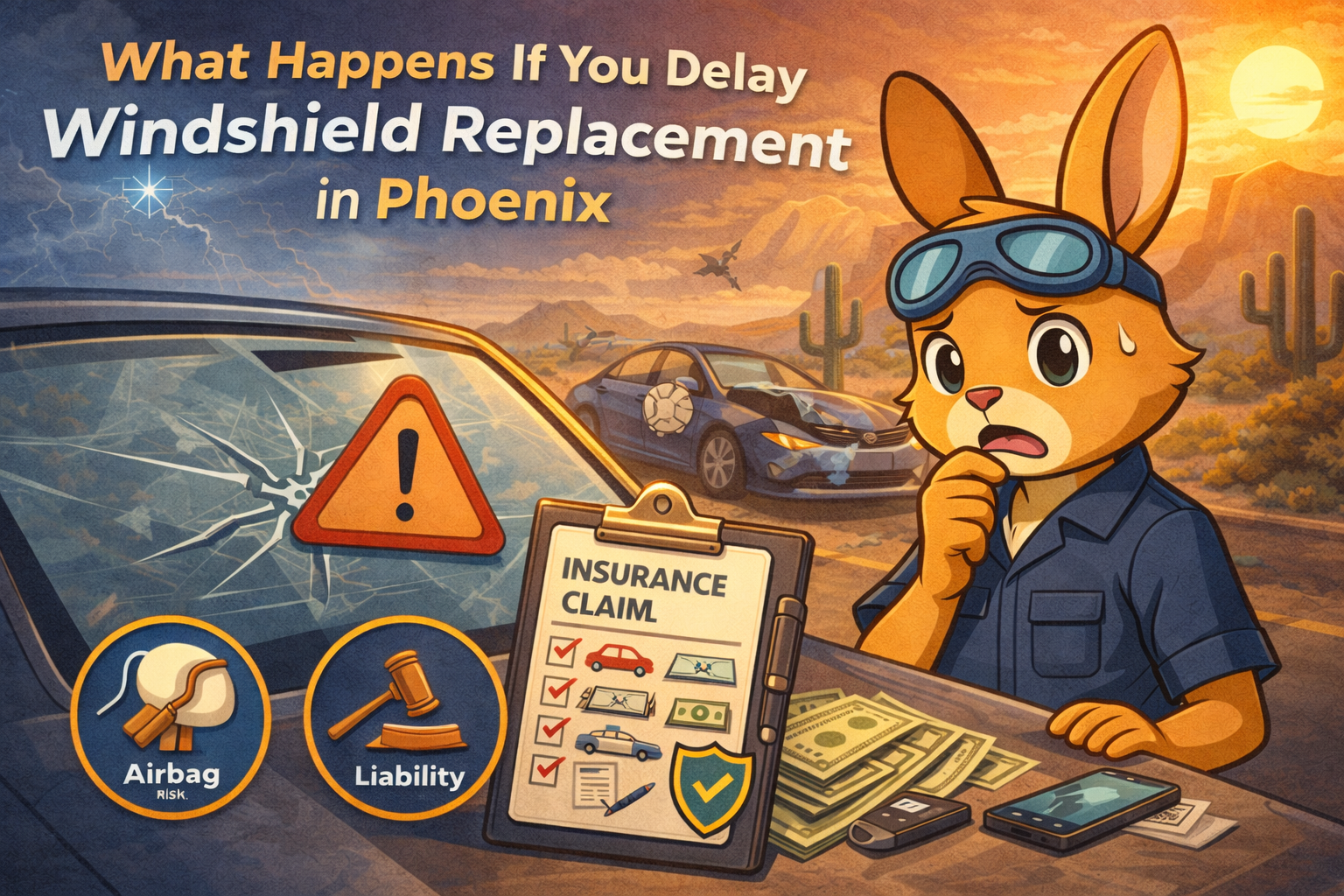
Delaying windshield service in extreme heat often increases total cost. As cracks spread, repairs that could have been completed early may no longer be possible, requiring full replacement instead.
Waiting also raises the likelihood of seal damage, which can introduce water intrusion, interior damage, and wind noise. From an insurance standpoint, unresolved damage may complicate claims if deterioration is documented as avoidable.
While exact percentages vary by vehicle and exposure, the trend is consistent. Early action reduces material cost, labor time, and scheduling urgency.
Safety Risks That Go Beyond Visibility
A windshield is a structural safety component, not just a viewing surface. The National Highway Traffic Safety Administration explains that the windshield supports roof strength and helps position airbags correctly during a collision.
Cracks can weaken this support. Visibility distortion, glare, and light scattering also reduce reaction time, especially during sunrise, sunset, and monsoon storms.
Ignoring damage increases risk during normal driving, not just in severe crashes.
Source, National Highway Traffic Safety Administration windshield safety guidance
How to Assess Damage and Know When to Call a Professional
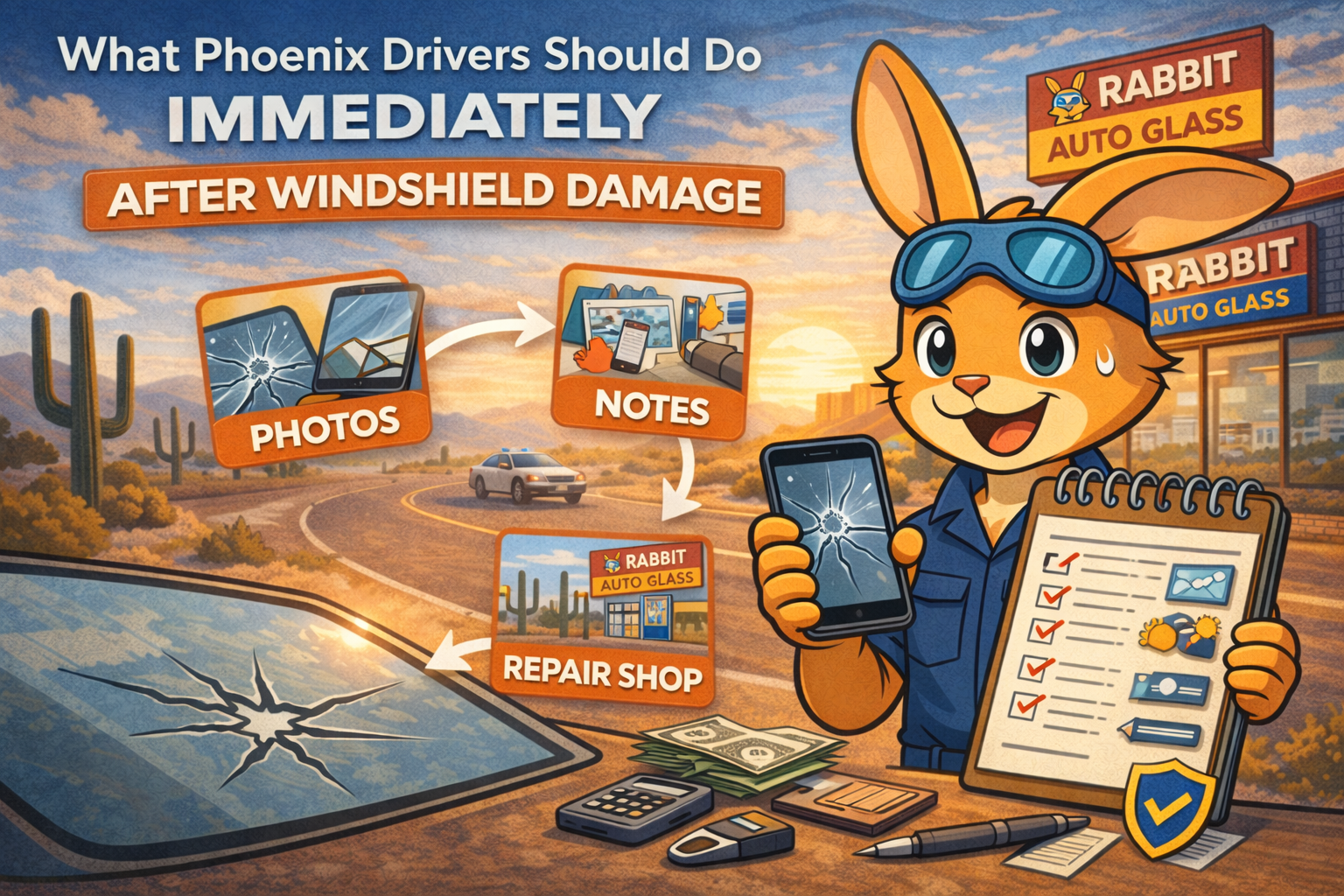
Start by noting crack length, location, and whether it crosses the driver’s line of sight. Damage near the edges of the windshield or expanding with temperature changes should be inspected promptly.
In Arizona, rapid crack growth is common after heat spikes. If you see spreading lines, distortion, or hear wind noise, professional evaluation is the safest next step.
At Rabbit Auto Glass of Phoenix and Tucson, we assess whether repair is viable or if replacement is required based on safety standards, not guesswork.
Choosing the Right Auto Glass Shop in Phoenix or Tucson
Look for a shop with certified technicians, written warranties, and experience working in Arizona heat. Transparent pricing, clear documentation, and proper calibration capability are essential.
Avoid providers who downplay crack severity or delay recommendations without inspection. A reputable shop prioritizes safety, compliance, and long term reliability.
Frequently Asked Questions
Driving with a cracked windshield is not recommended. Heat and vibration can cause rapid crack growth, increasing safety risk. Prompt inspection is the safest option.
Many Arizona policies include glass coverage under comprehensive insurance. Coverage depends on your policy and deductible, so verification is important.
Yes. Temperature changes can expand existing cracks quickly, especially during extreme heat events.
Temporary fixes may slow damage briefly but are not a substitute for professional repair or replacement.