
Phoenix Auto Glass & ADAS
ADAS Calibration After Windshield Replacement in Phoenix, What You Need to Know
ADAS recalibration after windshield replacement restores precise sensor alignment so your driver assist systems function as designed. In Phoenix, heat, dust, and sun make calibration even more critical. We follow OEM guided workflows, verify windshield specifications, condition sensors, and confirm accuracy with post calibration testing to factory tolerances.
What ADAS Recalibration Is and Why It Matters in Phoenix
ADAS recalibration realigns cameras, radar, and sensors so your vehicle’s driver assist systems interpret the road correctly after windshield replacement. In Phoenix, extreme heat and environmental stress can shift mounting points and optical angles.
We treat recalibration as a documented workflow. That includes sensor integrity checks, reference frame validation, functional testing, and alignment verification against vehicle specific data.
Lane keeping, collision avoidance, adaptive cruise control, and forward warnings all depend on precise alignment. Any deviation reduces accuracy and reliability.
When Windshield Replacement Triggers Recalibration
Windshield replacement is one of the most common triggers for ADAS recalibration because cameras and sensors are often mounted to or reference the glass.
We begin by verifying vehicle metadata, windshield type, mounting hardware, and sensor placement. Controlled removal and clean installation protect sensors from contamination or mechanical stress.
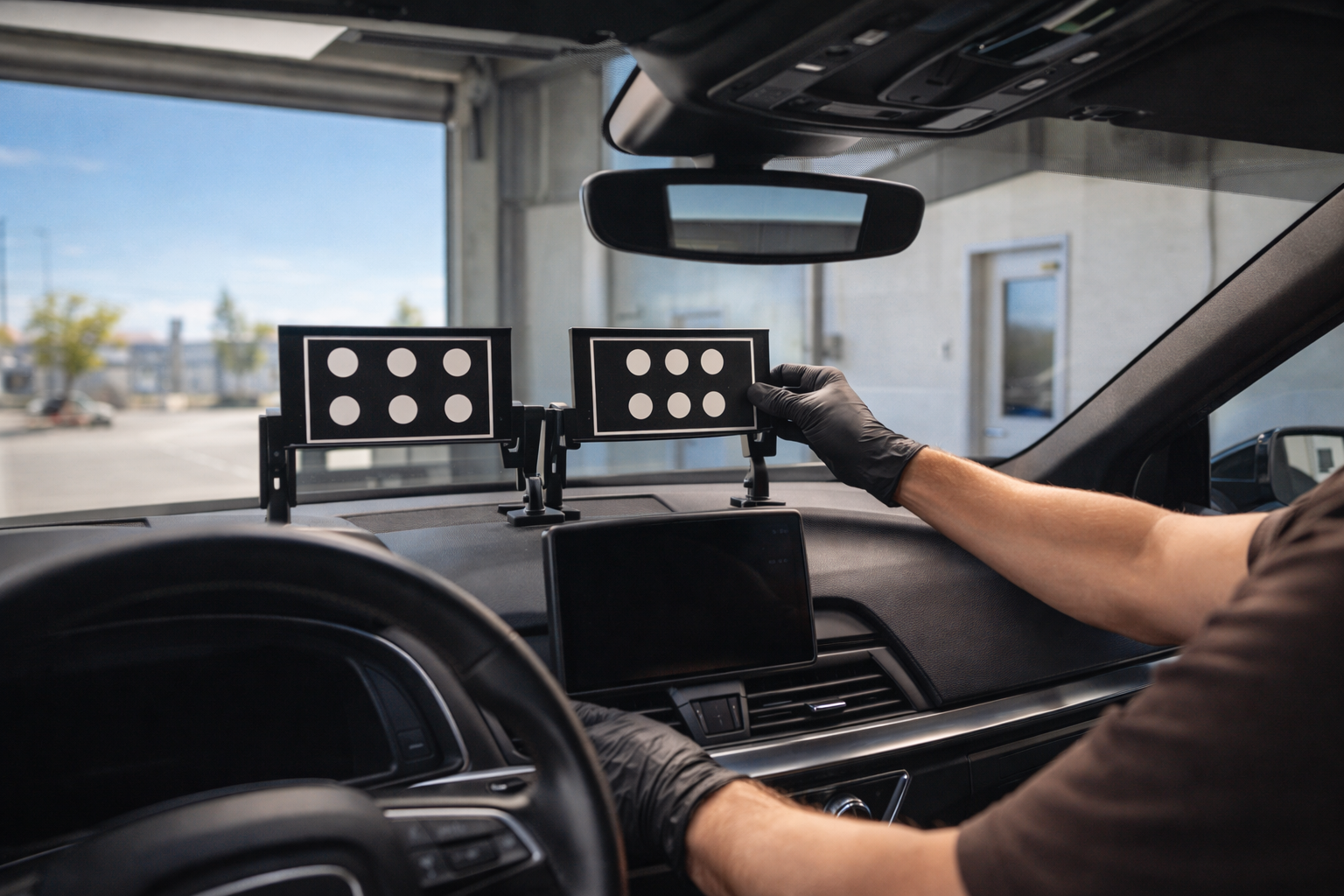
Calibration then aligns sensors to factory tolerances using precise targets and measurement references. Diagnostics confirm communication between modules, followed by functional tests for lane departure, adaptive cruise, and collision alerts.
How Heat, Dust, and Sun in Phoenix Affect Calibration Accuracy
Phoenix heat, dust, and sun create unique calibration challenges. Thermal expansion can subtly shift lenses and housings, while dust accumulation interferes with optical clarity.
We address this through thermal conditioning, cleanliness checks, and calibration sequencing performed under realistic temperature loads. Environmental data is documented to ensure repeatable results.
This process isolates sensor behavior from mounting drift, maintaining consistent ADAS performance across daily temperature swings.
Where to Get ADAS Calibration in the Phoenix Area
Reliable ADAS calibration requires certified technicians, OEM compatible equipment, and documented quality control steps. Not every glass shop meets these requirements.
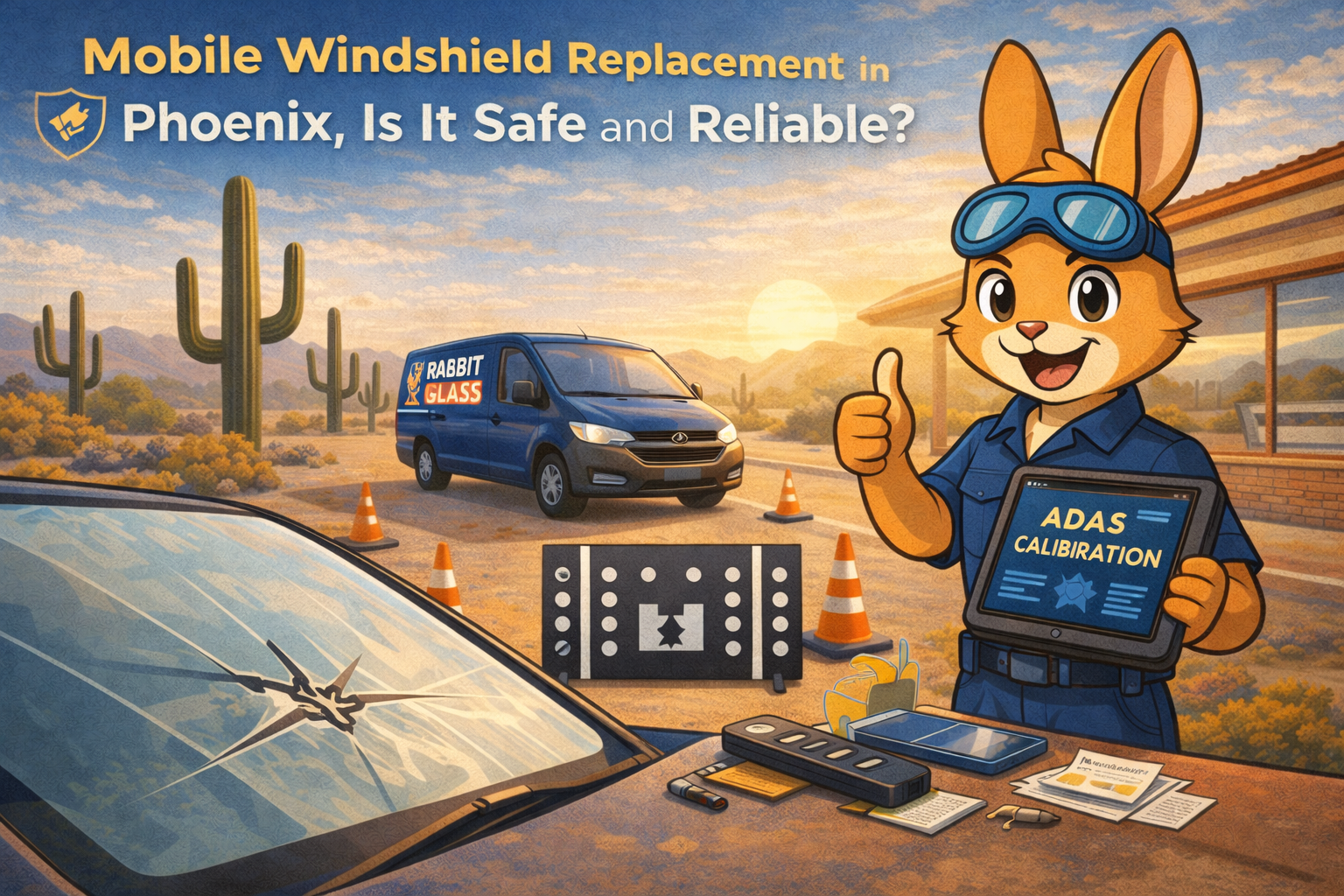
Look for providers offering calibration targets, diagnostic scans, post calibration verification, and road testing. Mobile calibration may also be available if performed with the same rigor as in shop service.
Prioritize shops that provide records of calibration results and follow manufacturer guidelines for your specific vehicle.
What to Expect: Cost, Time, and Risks of Skipping Calibration
Skipping calibration after windshield replacement introduces measurable safety risks. Misaligned sensors can cause lane drift, delayed braking, or false warnings.
Calibration typically takes 30 minutes to a few hours depending on vehicle complexity. Costs vary based on the number of sensors and required procedures.
For road trips, missed calibration may surface as inconsistent system behavior, reinforcing why recalibration is not optional.
Frequently Asked Questions
Yes, ADAS can be recalibrated without windshield replacement if sensors are misaligned. Diagnostics and targeted calibration restore accuracy without replacing the glass.
Airbags alone do not determine recalibration needs. Sensor placement, crash data, and component integrity drive recalibration requirements.
Most recalibrations take 30 minutes to 2 hours, depending on vehicle complexity and environmental conditions.
Aftermarket windshields can be recalibrated if they meet quality and mounting tolerance standards. OEM or certified aftermarket glass is recommended.
Yes, missing calibration can negatively affect resale value. Documented ADAS calibration reassures buyers and protects vehicle safety perception.