
Phoenix Auto Glass Warranty Guide
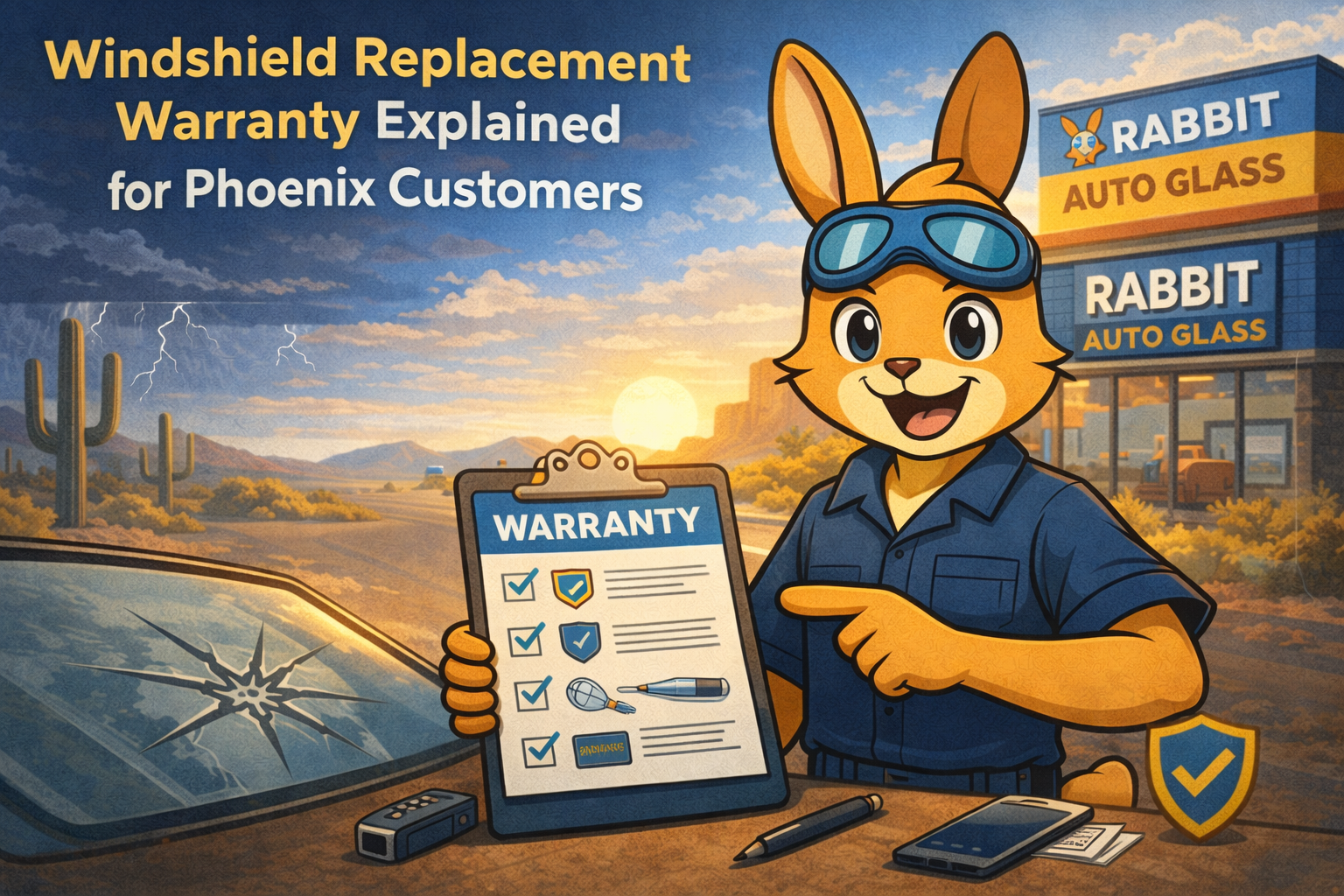
Windshield Replacement Warranty Explained for Phoenix Customers
At Rabbit Auto Glass of Phoenix, we want customers to clearly understand what a windshield replacement warranty actually covers and what it does not. A proper warranty protects you against installation related issues, material defects, and seal failures, not unrelated damage after the fact. Phoenix heat, monsoon storms, and road debris all play a role in how warranties are evaluated. Below, we break down warranty coverage, common exclusions, how to file a claim, and how to choose a shop that stands behind its work.
What a Windshield Replacement Warranty Covers in Arizona
In Arizona, a windshield replacement warranty generally covers workmanship and materials related to the installation. This includes proper glass fit, adhesive bonding, seal integrity, and leaks caused by installation defects.
If a windshield was installed correctly, it should perform like factory glass. A valid warranty typically protects against wind noise, water leaks, stress cracks caused by improper install, or glass separation tied to workmanship.
Coverage applies only to the replacement itself and not to unrelated damage that occurs after installation. Prompt reporting is required so issues can be inspected and addressed quickly.
How Phoenix Weather and Monsoon Season Affect Warranty Claims
Phoenix weather places unique stress on windshields. Extreme heat can expose weak seals or improper curing, while monsoon storms bring wind driven debris and sudden impacts.
Warranty coverage remains the same during monsoon season, but documentation becomes more important. If damage results from hail, rocks, or storm debris, that is typically considered new damage and not a warranty issue.
We advise customers to document weather events, take photos, and report concerns immediately. Early inspection helps determine whether an issue is related to workmanship or an external cause.
Common Warranty Exclusions and Pitfalls
Most windshield warranties do not cover damage caused by road debris, vandalism, accidents, or improper vehicle use. Chips, cracks, or impacts that occur after installation are not workmanship defects.
Other exclusions often include improper maintenance, off road use, pressure washing near edges, or ignoring pre existing damage. Failure to report an issue promptly can also void coverage.
Warranty terms vary by shop, which is why reviewing coverage details before installation is critical. A reputable shop explains limitations clearly and in writing.
How to File a Windshield Warranty Claim
Filing a warranty claim starts with contacting the shop that performed the replacement. Most claims require proof of service, photos of the issue, and the vehicle identification number.
The shop will inspect the windshield to determine whether the issue is related to installation or an outside cause. If covered, repairs or replacement are handled according to the warranty terms.
Keep copies of invoices, inspection notes, and communication records. Organized documentation helps resolve claims quickly and avoids delays.
Choosing a Reputable Phoenix Auto Glass Shop
A strong warranty starts with a reputable installer. Look for clear written warranties, transparent pricing, and technicians trained to industry standards.
Confirm that the shop supports ADAS calibration when required and understands Phoenix driving conditions. Ask about OEM versus aftermarket glass options and how warranties differ between them.
At Rabbit Auto Glass of Phoenix, we explain warranty coverage upfront so customers know exactly what is protected. Clear expectations protect your investment and your safety.
Frequently Asked Questions
Transferability depends on the warranty terms. Some warranties remain valid nationwide, while others require service through the original installer.
Yes. OEM glass often carries manufacturer backing, while aftermarket warranties depend on the installer and supplier.
No. Vandalism and impact damage are considered external causes and are not covered under replacement warranties.
Report concerns as soon as they appear. Prompt reporting helps preserve eligibility and allows timely inspection.