Arizona Auto Glass Guide
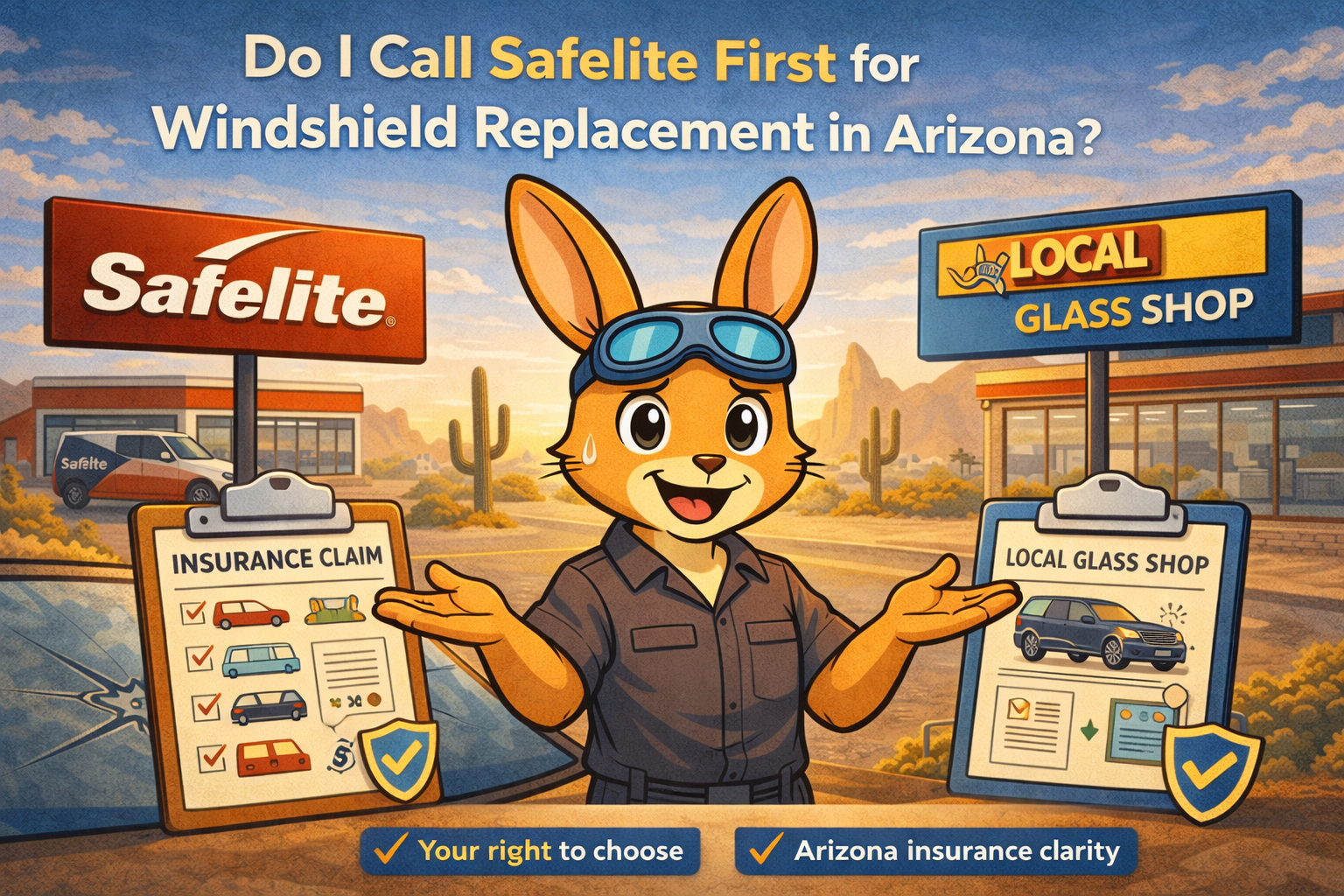
Do I Call Safelite First for Windshield Replacement in Arizona?
If your windshield cracks in Arizona, one of the first questions many drivers ask is, “Do I have to call Safelite first for insurance repair?” The short answer is no. At Rabbit Auto Glass of Phoenix, we regularly help drivers navigate insurance claims, shop choice, and calibration requirements without being locked into a national chain. Below, we explain how the process really works in Arizona, how insurance factors in, and why you are free to choose the glass shop that makes the most sense for you.
No, Insurance Does Not Require You to Use Safelite in Arizona
In Arizona, insurance companies cannot force you to use Safelite or any other specific auto glass company. Insurers may recommend Safelite because they have national agreements, but that recommendation is not a requirement.
Arizona law protects your right to choose your own repair facility. Whether you prefer a local Phoenix shop or a national provider, the decision is yours. You can file a claim directly with your insurer or contact a glass shop like Rabbit Auto Glass of Phoenix and let us help guide the process.
If an insurance representative strongly pushes one shop, remember that it is still your vehicle and your choice.
Should You Call Insurance First or a Glass Shop First?
In Arizona, either approach works. Some drivers file a claim with insurance first and then choose a shop. Others call a glass shop first and ask for help verifying coverage.
As a local Phoenix auto glass company, we often help customers determine whether filing a claim makes financial sense. If the replacement cost is less than your deductible, paying out of pocket may be the better option. If the cost exceeds your deductible, insurance usually covers the balance.
We regularly coordinate with insurance carriers, submit estimates and photos when required, and help confirm calibration needs for systems like Subaru EyeSight.
Will a Windshield Claim Raise My Insurance Rates in Arizona?
Many Arizona drivers worry that filing a windshield claim will automatically raise their insurance rates. In practice, glass only claims are often treated differently than at fault accident claims.
When damage is caused by road debris, rocks, or weather, it is typically considered a no fault comprehensive claim. Many customers report no rate change for a single glass claim, although each insurer applies its own underwriting rules.
We always recommend confirming details directly with your insurance provider so there are no surprises.
Why Prices Vary Between Safelite and Local Arizona Glass Shops
Pricing differences are common, especially when vehicles require ADAS calibration. National chains often bundle replacement and calibration into a higher total price, while local shops may separate costs or use different calibration solutions.
In Arizona, insurance generally pays for required calibration when it is necessary for safety systems to function properly. The key is accurate documentation and proper procedures, not the size of the company performing the work.
Whether you choose OEM or aftermarket glass also affects pricing. Insurance policies often default to equal kind and quality glass unless an OEM endorsement is included.
Why Many Arizona Drivers Choose Local Auto Glass Shops
Many drivers prefer local Phoenix glass shops because of personalized service, flexible scheduling, and direct communication. Local shops often provide clearer explanations of glass options, warranty terms, and calibration requirements.
Supporting a local business does not mean sacrificing quality or insurance compatibility. We meet safety standards, work with insurers, and stand behind our workmanship.
The most important factor is choosing a reputable shop that prioritizes correct installation and long term safety.
Frequently Asked Questions
No. In Arizona, insurance companies cannot require you to use Safelite or any specific glass shop. You have the right to choose.
In many cases, yes. If calibration is required for safety systems to function correctly, insurers often approve it as part of the claim.
If the cost is less than your deductible, paying out of pocket may make sense. If it exceeds your deductible, insurance usually provides better value.