
Phoenix Auto Glass Guide
How Dust Storms and Monsoon Season Damage Windshields in Phoenix
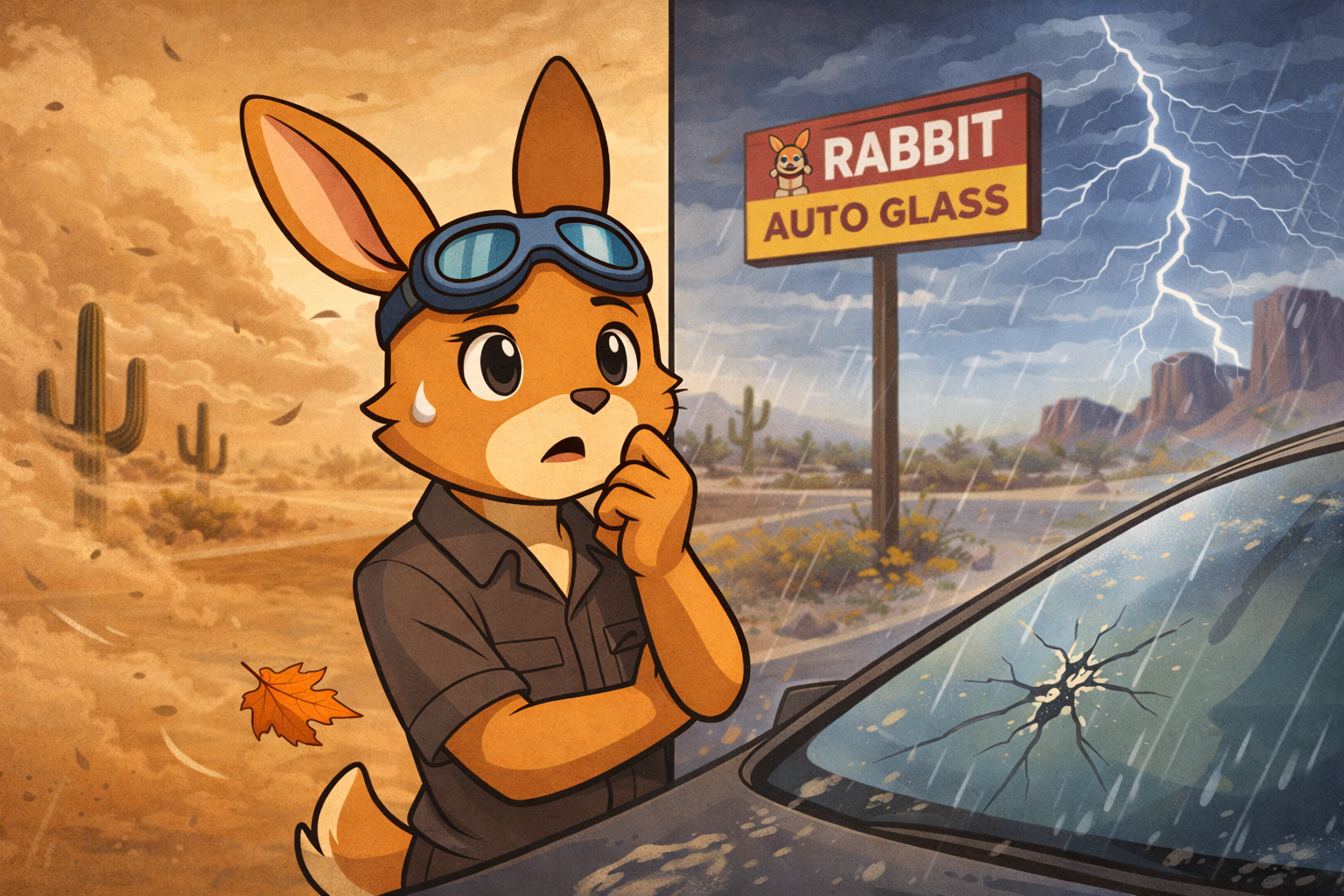
At Rabbit Auto Glass of Phoenix, we see firsthand how dust storms and monsoon weather accelerate windshield wear. Wind driven dust abrades coatings and seals, builds micro scratches, and concentrates damage along the lower edge. Monsoon rain and humidity reduce wiper effectiveness, increase streaking, and amplify visibility loss. Peak damage typically occurs July ; through ; September when dust, wind, and rain combine. Below, we explain why this happens and how Phoenix drivers and fleets can limit the impact.
What Makes Phoenix Dust and Monsoon Weather Unique for Windshields
Phoenix presents a unique environment for windshield damage due to the combination of fine desert dust and sudden monsoon rainfall. Dust particles are small, persistent, and easily suspended, which reduces visibility quickly and increases surface abrasion.
During monsoon season, rapid humidity spikes change how particles bind to glass. Moisture increases streaking and smear formation, especially when dust mixes with rain on hot glass surfaces.
From our field experience, these rapid shifts in wind speed, humidity, and particulate density create short windows of intense visibility loss. These conditions stress coatings, seals, and wipers far more than steady dry heat alone.
How Wind, Grit, and Sudden Rain Affect Glass, Seals, and Wipers
Wind driven grit acts like fine sandpaper on windshield surfaces. Abrasion tends to concentrate near the lower edge and along the A pillar where airflow deposits particles.
Over time, this causes micro scratching, coating wear, and seal degradation. Repeated cycles of extreme heat followed by sudden rain can harden seals, increase wind noise, and allow moisture intrusion.
Wiper blades are also affected. Rapid cooling during rain reduces blade elasticity, while trapped grit accelerates wear and worsens streaking. These factors compound during storms and reduce safe visibility.
Seasonal Timing and When Damage Peaks in Phoenix
Windshield damage in Phoenix is not evenly distributed throughout the year. From what we service, incidents rise sharply during the monsoon months.
July ; August ; and ; September see the highest rates of chips and cracks due to increased wind gusts, airborne debris, and rapid weather changes. August often shows the highest concentration of claims and emergency replacements.
Outside of monsoon season, damage still occurs, but at lower frequency. Understanding this timing helps drivers and fleets plan inspections and preventive maintenance ahead of peak risk.
Practical Protection Steps Before, During, and After Storms
Protection starts before storms arrive. Inspect windshields for small chips, replace worn wiper blades, and avoid driving with existing damage during storm season.
During storms, reduce speed and avoid driving when visibility drops sharply. Use recirculation settings to limit dust intrusion and avoid running dry wipers across dusty glass.
After storms, rinse the windshield gently to remove grit before wiping. Inspect for new chips or edge damage and address them quickly to prevent spreading. Early repair is one of the most effective ways to extend windshield life.
Choosing the Right Auto Glass Partner to Extend Windshield Life
The quality of repair and replacement matters significantly in Phoenix storm conditions. We recommend choosing an auto glass company with certified technicians, documented processes, and clear warranties.
At Rabbit Auto Glass of Phoenix, we focus on proper surface preparation, correct sealing, and clear communication. We help drivers understand when repair is viable and when replacement is the safer option.
Consistent maintenance, prompt repair, and professional installation are the best defenses against long term storm related damage.
Frequently Asked Questions
Dust particles are finer and create many small contact points. This leads to gradual micro scratching rather than deep gouges. Over time, these scratches increase glare and reduce clarity.
Some coatings can improve water shedding and reduce streaking. Performance varies by product and maintenance, so compatibility and warranty terms should be reviewed.
No. Chip risk depends on debris size, trajectory, and windshield condition. Wind speed increases risk when loose debris is present but is not the sole factor.
Yes. Hard or worn blades can concentrate stress and drag grit across the glass. Replacing blades regularly reduces this risk.
Haze, micro scratches, seal discoloration, and reduced optical clarity are common. These issues gradually reduce visibility even without obvious cracks.